Designing for the Dormant Season at RGS: Finding Beauty and Function in the Winter Landscape
In the rolling hills of Central and Southeastern Pennsylvania, we experience the seasons in their extremes. We have the humid, vibrant explosions of summer greenery and the crisp, fiery transitions of autumn. But then comes winter. For many, winter is viewed as a pause button. It is a time when the outdoors goes dormant, gray, and lifeless.
From the perspective of landscape architecture and site design, however, winter is not a time of absence. It is the ultimate “stress test” for a project. It is the season that strips a site down to its bare essentials, revealing whether the fundamental design holds up without the decoration of leaves and blooms.
At RGS Associates, we believe that placemaking doesn’t take a holiday between December and March. When the foliage fades, the “bones” of the landscape are revealed. A well-designed site must be compelling whether it is blanketed in snow or sitting under the muted gray of a dry February afternoon. By focusing on texture, structural form, hardscaping, and smart civil engineering, we ensure our landscapes remain alive even in the depths of the dormant season.
Structure and Form: The “Bones” of the Landscape
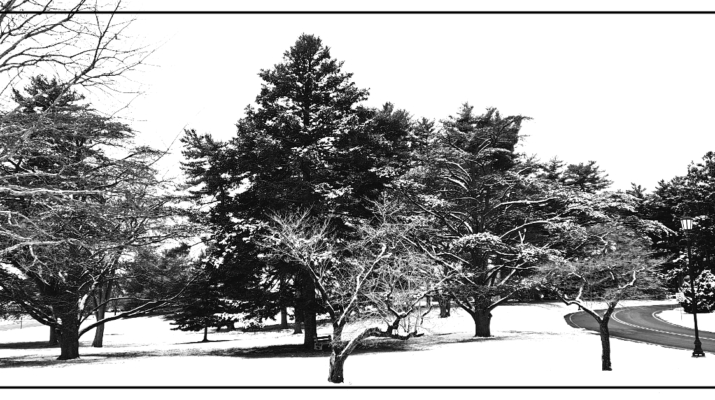
When a site is lush with spring blooms or summer shade, it is easy to overlook the underlying structure of the planting design. Winter changes that dynamic instantly. Without the distraction of leaves, the silhouette and texture of the landscape become the primary visual elements.
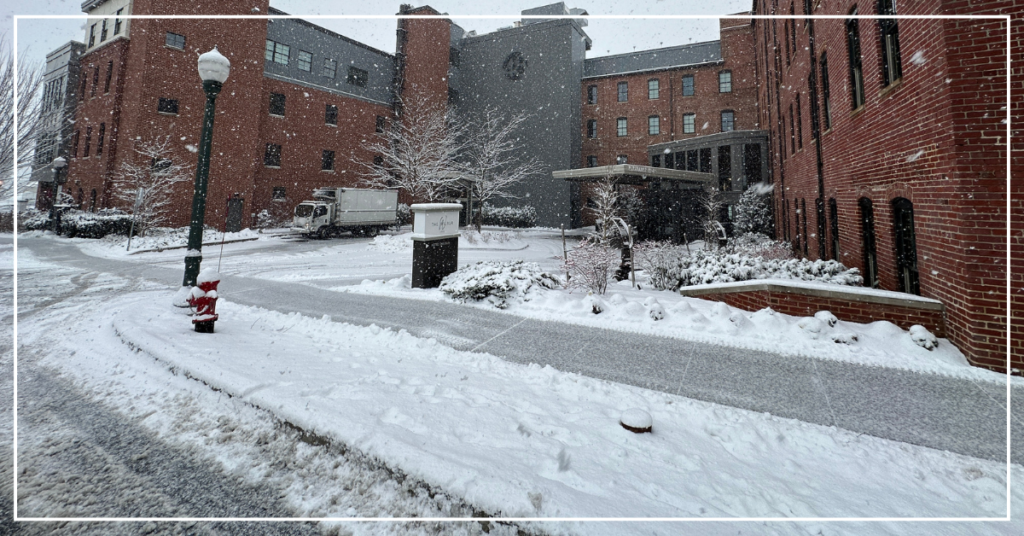
We often refer to this as the “architecture” of the plant material. We select deciduous trees not only for their canopy shade in August but for their branching patterns in January. A tree with a strong, sculptural form serves as a piece of natural art against a stark sky, regardless of whether the ground is white or brown.
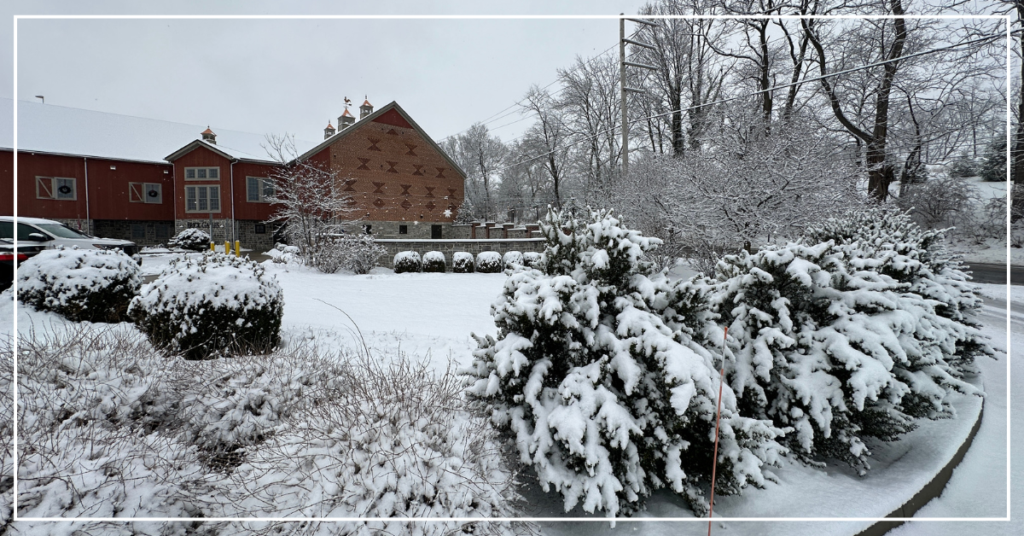
This focus on form extends to how we define space. In summer, privacy screening is easily achieved with dense leaves. In winter, those screens disappear, potentially leaving a site feeling exposed. We counter this by integrating “bones” that persist year-round using a mix of coniferous (evergreen) and deciduous trees and shrubs to ensure that spatial definition and screening remain intact.
Hardscape as the Winter Anchor
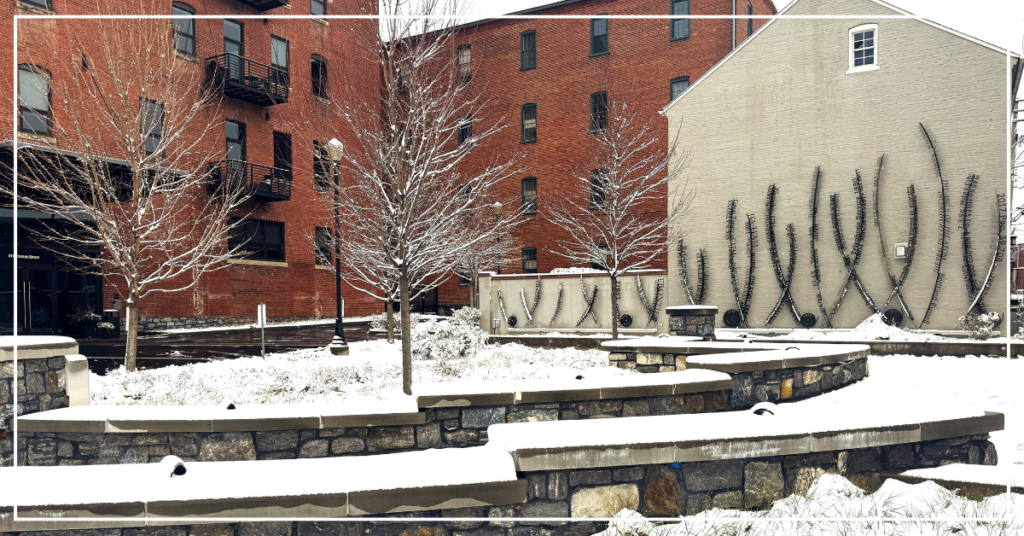
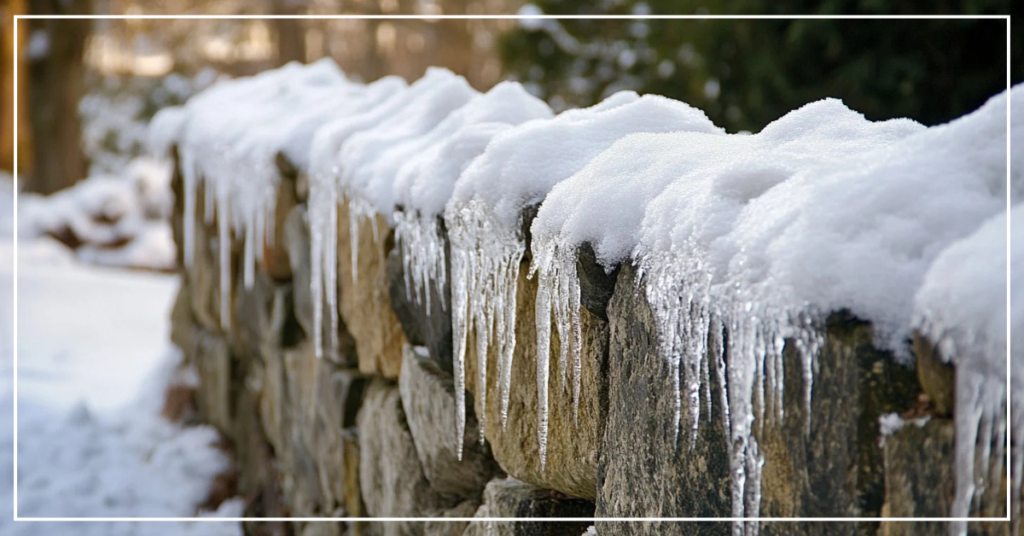
While plants are often the stars of the show in warmer months, hardscape elements step into the spotlight during winter. This is because the winter landscape is defined by elements that go beyond plant material. Statuary, fences, columns, and walls all contribute to visual interest outside of seasonal leaf changes.
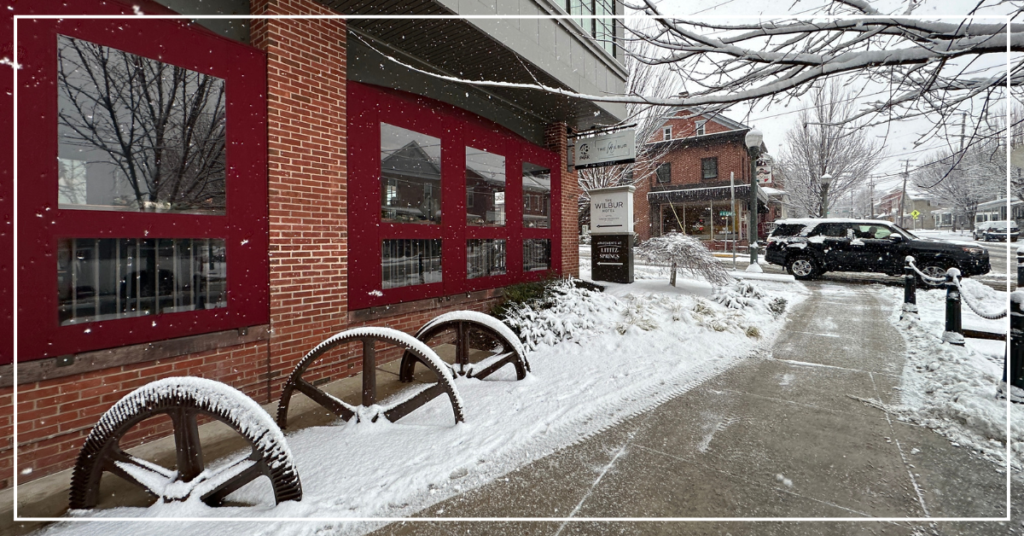
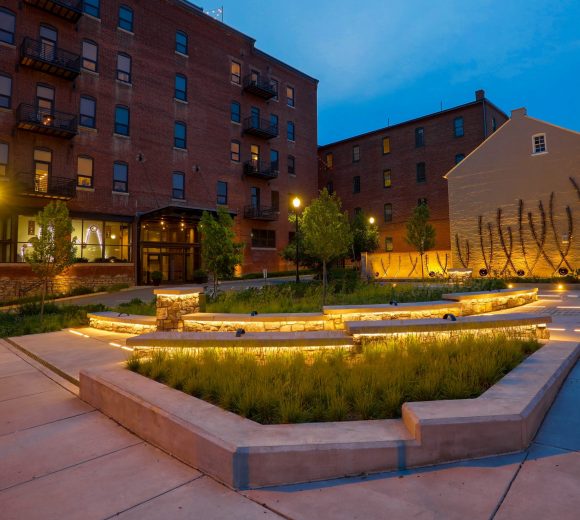
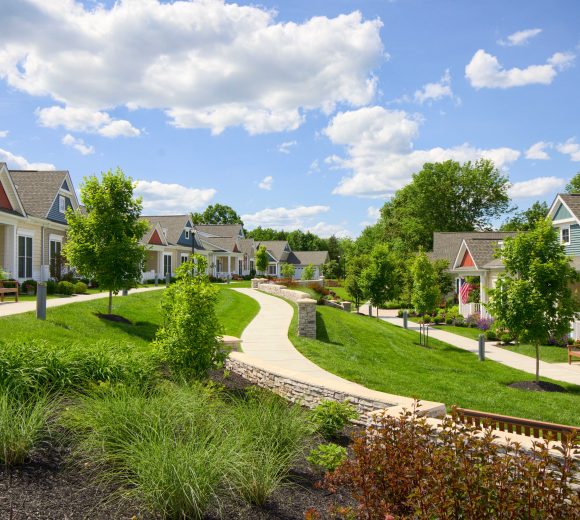
These elements provide the permanent lines and boundaries that ground a site. A well-placed stone wall or decorative fence provides immediate contrast against the dormant ground plane. Furthermore, these features often serve dual purposes. A retaining wall that offers seating in the summer becomes a sculptural line of shadow and form in the winter.
Lighting the Long Nights
With shorter days and longer nights, the way a site is illuminated becomes paramount. Winter lighting is certainly about safety, but it’s also about drama. The winter landscape reflects light differently. Even without snow, the bare branches and architectural details catch light in unique ways. We design lighting plans that highlight the textures of tree bark, the facade of a building, or the silhouette of shrubs, creating an atmosphere that is dramatic and inviting rather than bleak and subdued.
Texture and Movement
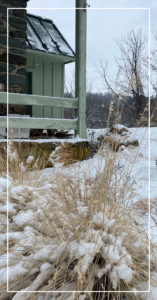 A common practice in winter maintenance is the urge to “clean up” the garden too early. There is a tendency to cut back perennials and grasses as soon as they turn brown in the fall. We suggest reconsidering this approach.
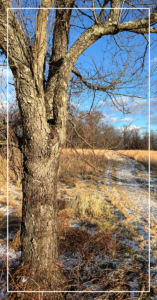 Ornamental grasses are among the most valuable tools in the winter designer’s palette. When left standing, they provide critical texture and movement. In a season often defined by stillness, the swaying of tall grasses in the wind adds a dynamic quality to the landscape.
Visually, the tan and gold hues of dormant grasses pop beautifully against the cool, muted tones of a gray winter day, or provide a striking warmth against the blinding white of a fresh fallen snow.
Color and Contrast: Bark and Berries
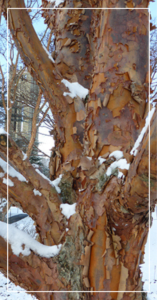 Who says winter has to be drab? While we may not have the vibrant purples and yellows of spring, the winter palette offers its own sophisticated range of colors.
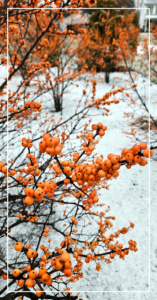 We design for winter interest by selecting plants that offer texture and color through their bark and berries. For example, the Red or Yellow Twig Dogwood is a staple because its bright stems stand out vividly against a brown, gray, or white backdrop.
Similarly, we look for trees with exfoliating or unique bark, such as the River Birch or Paperbark Maple. The peeling, paper-like texture of their bark adds a rugged complexity to a visual field that is often hidden by leaves during the rest of the year.
Where Function Meets Form: Engineering Winter Safety
Designing for winter is not solely an aesthetic exercise; it is also a rigorous engineering challenge. We must consider how a site functions under the stress of freezing temperatures and the inevitable freeze-thaw cycles that characterize Mid-Atlantic winters.
Sometimes, the best winter solutions come from unexpected places. A prime example is our use of porous paving. Originally designed as a stormwater management tool, porous paving has proven to be a secret weapon for winter maintenance.
 We observed this benefit firsthand at projects like the Landis Communities’ Steeple View Lofts.
In a traditional parking lot, precipitation, whether rain or melting snow, often pools on the asphalt and refreezes into “black ice” as temperatures drop. With porous paving, that cycle is broken. The water drains through the pavement rather than sitting on top of it. The result is a surface that clears faster and stays safer, reducing the risk of ice formation even during those wet, freezing weeks where snow isn’t a factor.
A Landscape for All Seasons
At RGS Associates, we view the site as a living entity that evolves 365 days a year. By establishing a strong foundation, utilizing hardscape creatively, preserving the texture of dormant plants, and employing smart engineering, we create environments that embrace the winter rather than just endure it.
Snow or no snow, the result is a landscape that encourages people to step outside and appreciate the unique, quiet beauty of the season.