Designing for Dignity: How Intergenerational Living Redefines Community Design
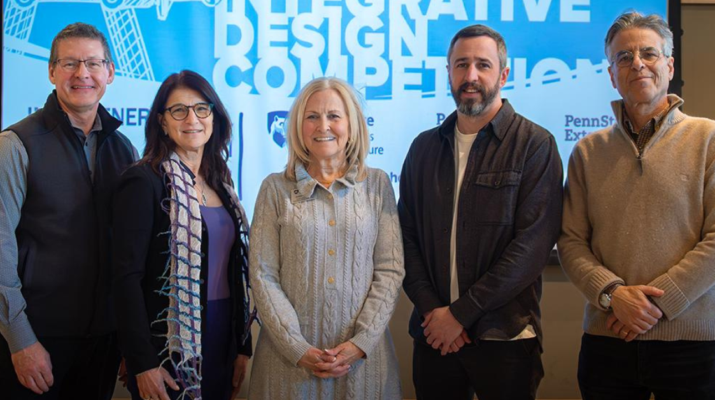
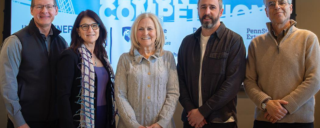
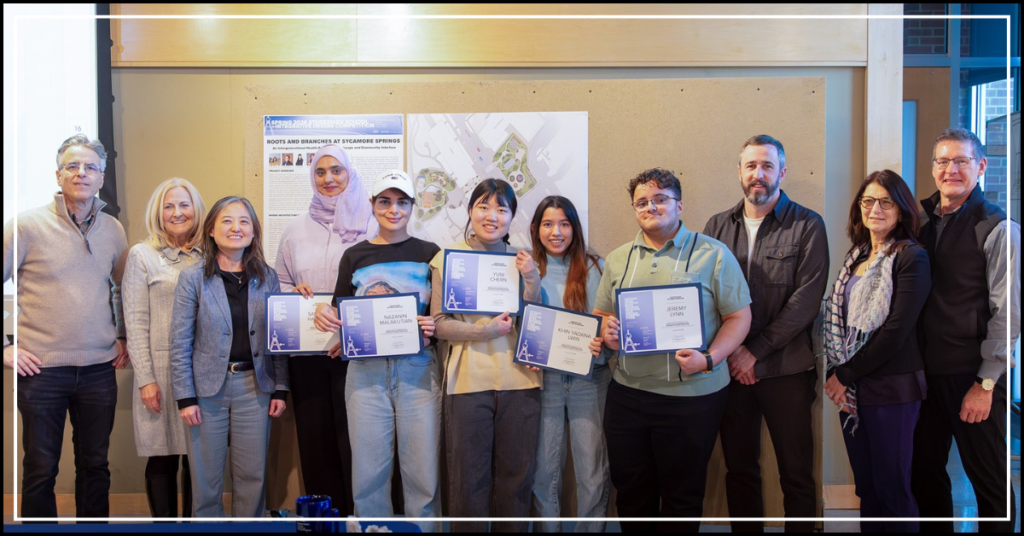
*Design Competition Jurors (L – R):
Mark Hackenburg, Carla Bonacci, Janice Whitaker, Eric Yeamans, and Matthew Kaplan
The Hidden Connection of Dignified Design
As we age, it’s the little indignities we notice first.
A silver strand of hair catches our eye in the mirror. We notice crow’s feet walking away from our eyes. We stumble over an object that isn’t there. Strangely, we often greet these developments with a smile. Then, we frown, because it dawns on us exactly what they mean.
Over time, dignity slips away in more pronounced ways. We struggle to recall that one guy’s name from that one show. We wake up with pain we can’t explain. We begin to feel invisible as young people call us “sir” or “ma’am.” Our independence steadily fades until our very privacy no longer belongs to us.
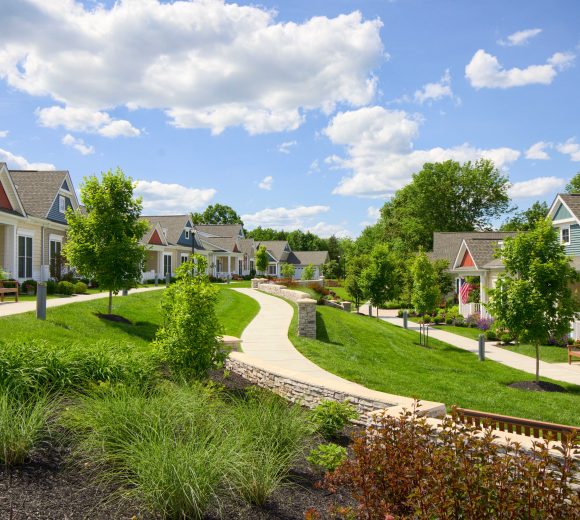
Yet something as simple as a network of wide, even walkways can bring dignity flooding back. We can walk across them unaided and unencumbered, interacting with friends and strangers. A well-lit courtyard restores our confidence because we can take in everything—the bride’s joyful tears, the groom’s trembling hand, children playing, or the delicate slope of a flower petal … everything.
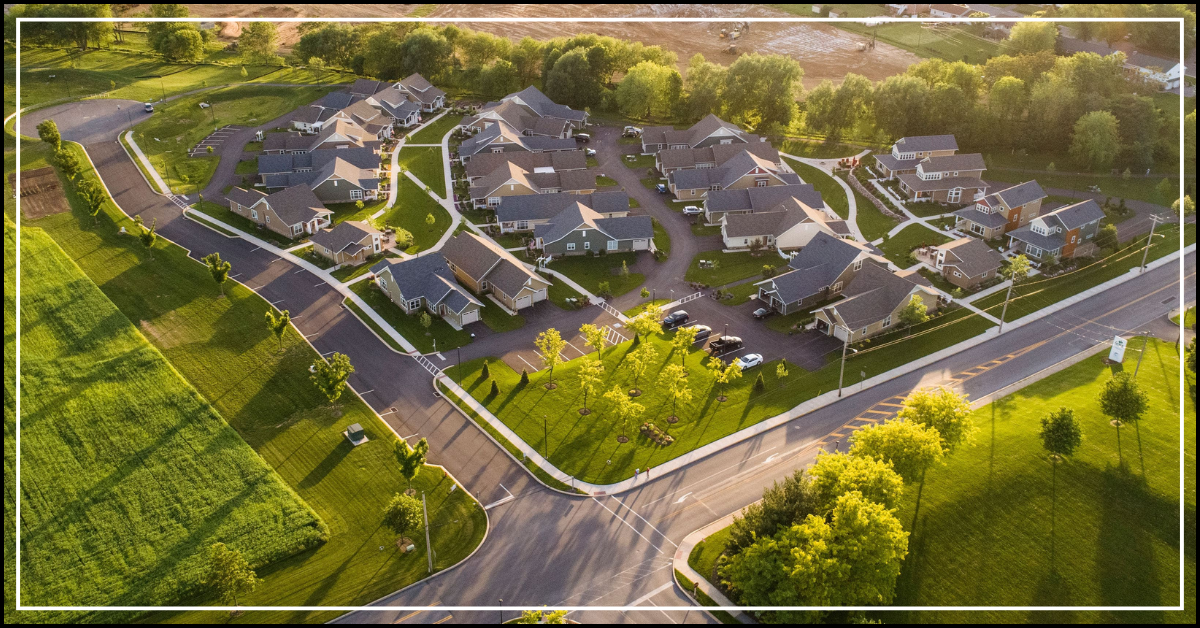
This is why landscape architecture matters. And it’s why RGS Associates agreed to support and participate in Penn State University’s inaugural “Designing for Dignity” International Intergenerational Design Competition last month.
Bringing Dignity to the Built Environment

Spearheaded by Penn State’s Hamer Center for Community Design, the competition challenged students to stop building silos for aging adults and start building communities where every generation can contribute. It focused on the very real and very physical social enigma of shared spaces.
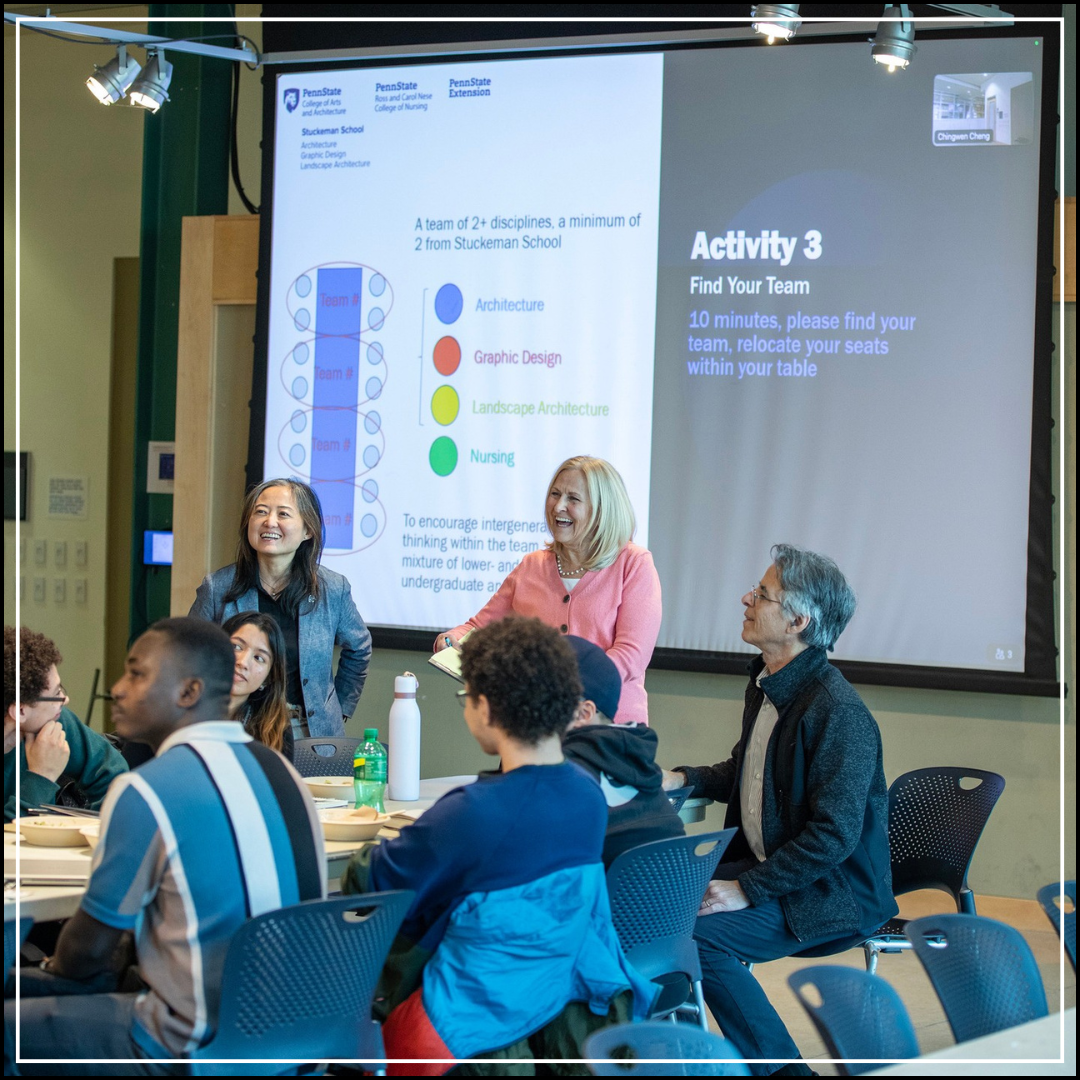
Best of all, the two-week-long design challenge forced a collision of vocational pursuits.
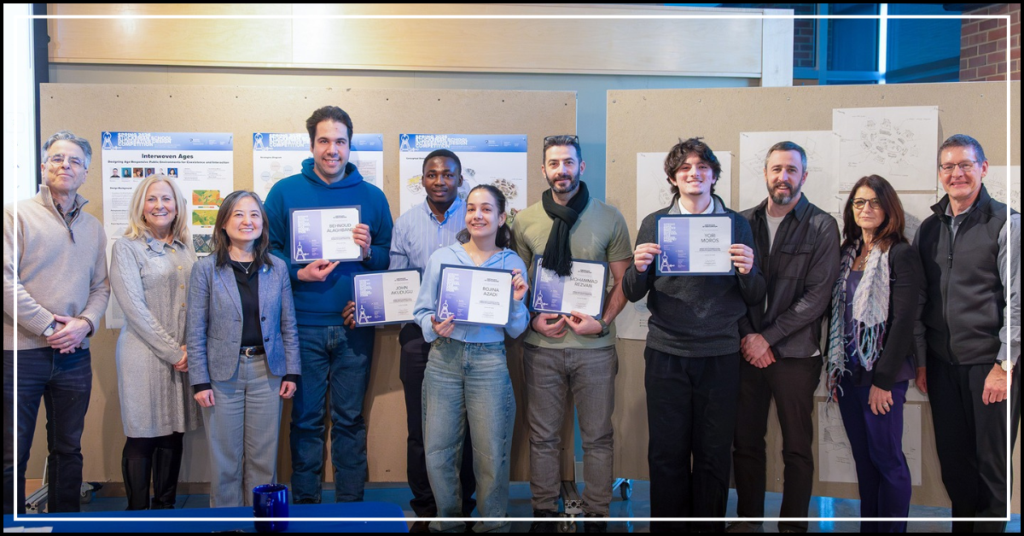
The design teams included students from various disciplines across campus: architecture, landscape architecture, graphic design, and, most importantly, nursing. It was steeped in social research, and the design outcomes challenged convention. RGS and Garden Spot Communities provided a site design opportunity for the student teams to consider, and principal Mark Hackenburg, RLA, served as one of the competition’s “jurors.”
“In our world at RGS, we don’t have the luxury of working in a vacuum,” he said. “Every project is a puzzle of regulations, environmental constraints, design challenges, and community needs. But when you solve that puzzle correctly, you create places that not only respond to societal needs, but also function for the people living there decades later.”
For Mark, the competition was an exciting opportunity to peer into the future of landscape architecture itself.
“It was incredibly gratifying to see these students lean into the notion of a collaborative approach,” Mark said. “In our work environment, we do this daily, but seeing that interdisciplinary work at the university level shows a very positive trajectory for the design professions.”
When Nursing Informs Design

The inclusion of the College of Nursing was perhaps the competition’s most vital masterstroke.
While a designer might focus on the aesthetic curve of a garden path, a nursing student sees that same path through the lens of physical limitations, mobility challenges, and human agency.
They understand that three small steps are not just a design feature; they are an impassable barrier for someone who no longer trusts their footing.
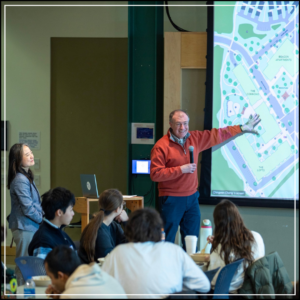
They know that “inclusive design” means creating environments that are purposefully planned for use across generations, where young and old alike can come together, share experiences, and live vibrantly.
Steve Lindsey, CEO of Garden Spot Communities and a keynote speaker at the event’s kickoff, believes this interdisciplinary approach is the only way to facilitate “human flourishing.”
“Dignity in the built environment is an opportunity to recognize the value that people bring to the community and highlight that, rather than their shortcomings, struggles, or disabilities,” Steve said. “It’s creating an environment that allows everyone to be their best self.”
The Movement Toward Intergenerational Living
This focus on dignity is part of a broader shift toward intergenerational living, a housing model that intentionally brings together people of different ages to combat the isolation that often plagues the elderly.
For decades, the American culture of aging has trended toward segregation. We built beautiful facilities on the edges of towns, but in doing so, we edged out older adults whose experiences could inform the future. We lost the “wisdom project” of daily life, where stories are handed down, and resilience is shared between the young and the old.
Steve pointed to a stark historical contrast: In 1900, the U.S. was one of the most age-integrated cultures in the world; by 2000, it had become the most age-segregated.
“We have this ongoing sense of loneliness,” he said. “By disengaging the generations and becoming so age-stratified, we really have moved older adults to the margins of society. We have lost so much as a result of that. How do we recreate those environments that bring generations back into our communities and reignite connection?”
Closing the Loneliness Gap
Mark believes addressing the loneliness issue is a major part of effective design.
“In our industry, we have to look at how we are actually building the ‘connective tissue’ back into these sites,” he said. “It’s about more than the home; it’s about the space between the homes where life actually happens.”
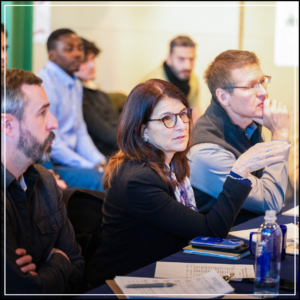
The students at Penn State sought to reverse that trend.
One of the teams of graduate students designed a “bus stop park” in an underserved area, turning a simple transit stop into a social hub where interactions across generations occur naturally.
“We have such a wonderful opportunity to recognize the value that every person brings to a community,” Steve said.
“When we design spaces that allow people to show up as their best selves, we aren’t just accommodating their struggles—we’re highlighting their strengths. The design is the bridge that makes that possible.”
Translating Vision into Executable Outcomes
At RGS, the intergenerational design competition is emblematic of the work we do every day for clients like Garden Spot, Pleasant View, and Landis Homes. We believe that constraints—whether regulatory, physical, or social—are not insurmountable obstacles but design inputs to work with.
As Steve put it, the goal is to create “authentic community.” Whether it is the layout of a courtyard that encourages a spontaneous conversation or a sidewalk that allows an older adult to walk confidently to the store, the Penn State competition is an important reminder that we are designing for the enduring moments that make life worth living.
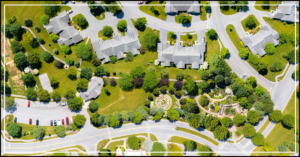
“We have learned so much from the way RGS looks at design and community development,” Steve said. “They approach every new project with such a collaborative spirit. They look at senior living as an opportunity to really create something special, to deeply understand the dynamics at play, and to design around it all to create the best possible result.”
All event photos courtesy of Henry Montalvo and the Penn State College of Arts and Architecture.