Why Landscape Architecture Remains the Enduring Force of the Built Environment
Every April, World Landscape Architecture Month gives RGS Associates a chance to reflect on a profession that shapes how people experience communities, campuses, neighborhoods, and public spaces.
It is also a good opportunity to ask how landscape architecture is changing, what has endured, and where the profession may be headed.
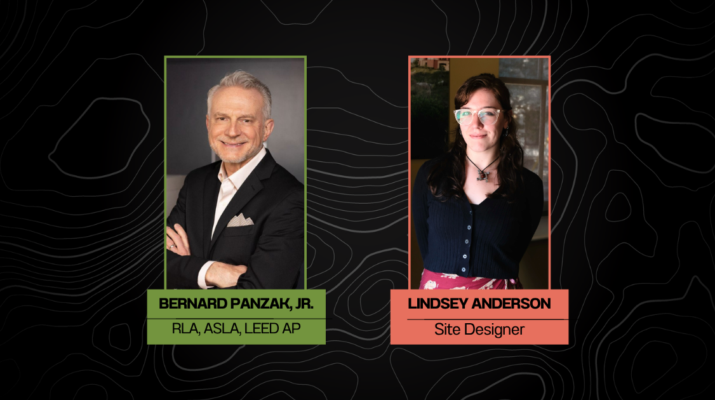
A recent conversation with RGS Associates Principal Bernard “Bern” Panzak, RLA, and RGS site designer Lindsey Anderson offered two different, but equally insightful, perspectives on all three questions.
Bern has spent the better part of four decades in landscape architecture and began his career in an era of hand drafting and blueprint machines. Lindsey began her professional career about two years ago, stepping into a digital environment shaped by modeling software, remote collaboration, and growing attention to sustainability. Their vantage points may be different, but both agree that while the tools have changed significantly, the heart of the work has not.
From Drafting Tables to Digital Tools
For Bern, the biggest shift has been technology.
“When I started, everything was done by hand with T-squares and drafting tools,” he said. “That was simply how the work got done.”
Software has changed how quickly teams can test ideas, visualize spaces, and coordinate work. Lindsey, however, was quick to point out that older methods still have value, especially during early concept work.
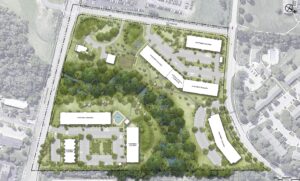
“There are parts of the process that are still quickest to work through by hand,” Lindsey said. “When you’re sketching ideas and talking through concepts, it’s often the fastest way to think.”
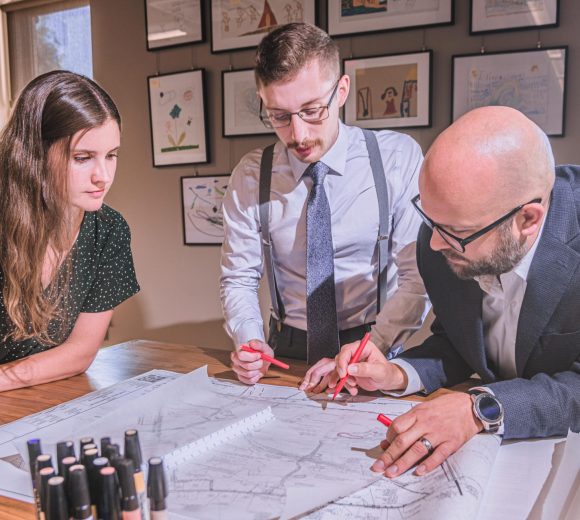
Technology has also changed how landscape architects work together. Remote collaboration and shared digital tools make it easier to keep projects moving when people are in different places. But both Bern and Lindsey said the strongest design collaboration still tends to happen in person.
“The best collaborations, charrettes, and design reviews still happen face to face,” Bern said. “There is something about being in the same room and working through a problem together that technology still can’t replace.”
A Stronger Environmental Focus
Another major evolution both Bern and Lindsey identified is landscape architecture’s increased attention to environmental cohesion.
“There’s been a real shift toward native plants and a stronger environmental awareness,” he said. “That has only increased over time.”
Stormwater management, planting design, and material selection are not new concerns, but the way designers respond to them has evolved. Functional areas that may once have been treated as purely technical spaces are now more likely to be designed as integrated parts of the landscape.
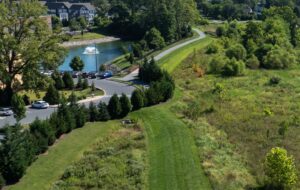
That shift is especially meaningful to Lindsey. She was drawn to the profession because it allowed her to combine creativity with her longtime interest in plants and science.
“I grew up on a farm, so I was always interested in plants and the natural world,” Lindsey said. “Landscape architecture gave me a way to connect that interest with design.”
It also shapes how she sees the future of the profession.
Lindsey said one of the most encouraging changes is that environmental priorities are becoming more widely shared. On a recent project, community members were less focused on opposing development than on asking which tree species were being planted, how much biodiversity the plan would support, and whether the planting palette reflected thoughtful ecological choices.
To her, that signals a healthy direction for the industry.
Looking Ahead: Ecology, AI, and the Future of the Profession
The conversation also touched on AI and automation. Lindsey’s view was measured. She does not see those tools as a replacement for designers, but she does see promise in technology that can reduce repetitive work and create more time for thoughtful design.
“Anywhere we can automate part of the process, that creates exciting possibilities,” she said. “If it gives us more time to focus on design thinking, that’s a good thing.”
Used well, those tools can create more time for planting design, coordination, grading, and problem solving. Bern’s outlook on the future was broader, but similarly optimistic. He said landscape architecture will continue to matter because it remains closely connected to how people use and experience places.
“We’re creating spaces and connections that people use every day,” he said. “That human element is always going to matter.”
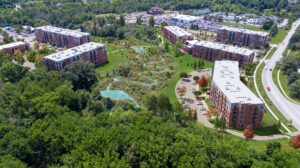
Even with all the technological and environmental shifts, Bern kept returning to a simple point: the fundamentals still hold.
“Water still runs downhill,” he said. “That part hasn’t changed.”
It was a light moment in the discussion, but it captured something true. The profession still depends on listening to the people we serve and understanding natural systems, existing and proposed functions, code compliance, collaborative teamwork with other professionals, construction dynamics, and ultimately human use. Good design still means solving problems posed by real constraints.
What Has Not Changed
That was one of the biggest adjustments for Lindsey after entering professional practice. Penn State prepared her well (just as it did Bern years ago), but she was still surprised by the breadth of detail involved in real projects.
“One of the biggest surprises was seeing just how detailed professional design work really is,” she said. “Things that seem simple on a plan become much more complex once they have to be built.”
Examples include grading, lighting, materials, planting, signage, and construction coordination. But that complexity is part of what makes the work challenging and rewarding, she said.
Advice for the Next Generation
The conversation also turned to what young professionals need as they enter the field. Bern emphasized the importance of practical experience.
“Get some construction experience,” he said. “Get your hands dirty.”
For young professionals, he believes there is real value in understanding how drawings become built work. That experience strengthens judgment and makes better designers.

Lindsey’s advice to students entering the field was equally practical. Instead of overthinking the perfect first step, she suggested starting somewhere, learning from experience, and allowing clarity to develop through the work itself.
“You need to land somewhere and start doing the work,” she said. “A lot becomes clearer once you’re actually in it.”
Why the Work Still Matters
What comes through most clearly in both perspectives is that landscape architecture remains human work. Technology will continue to advance, and environmental expectations will continue to grow, but the profession will still depend on listening, interpretation, coordination, and judgment.
Bern described landscape architects as “the glue” on a project team. They help connect disciplines, coordinate priorities, and bring different pieces together into a coherent whole. At RGS, where landscape architects and civil engineers work closely together, that collaboration is built into the way the firm operates.
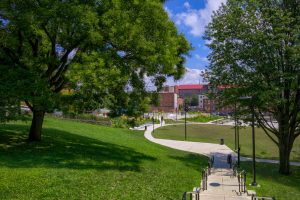
That is part of what makes World Landscape Architecture Month worth recognizing. It is a chance to celebrate a profession that continues to evolve while staying grounded in the same basic responsibility: creating built environments that function well, respond to their context, and serve people over time.
“There is tremendous satisfaction in seeing a project come to life,” Bern said. “That part of the profession never gets old.”