How Thoughtful Site Design Supports Affordable Housing in Pennsylvania
 RGS Associates will be at the 2026 Homes Within Reach Conference!
The conference is an opportunity for Pennsylvania’s housing professionals, service providers, tenants, landlords, local government, and community builders to learn, connect, and network.
Planning on attending this year? Connect with us in Hershey, PA, from December 14-16 at The Hershey Lodge. You’ll find our team at Booth #26!
Across Central and Southeastern Pennsylvania, former schools, underused commercial buildings, and overlooked urban properties are creating new opportunities for affordable housing.
Some projects preserve familiar landmarks. Others find ways to introduce housing on constrained sites or make homeownership more accessible. Each calls for careful planning around zoning regulations, site conditions, infrastructure, and the needs of the surrounding community.
For RGS Associates, helping clients navigate these considerations is an important part of supporting affordable housing development.
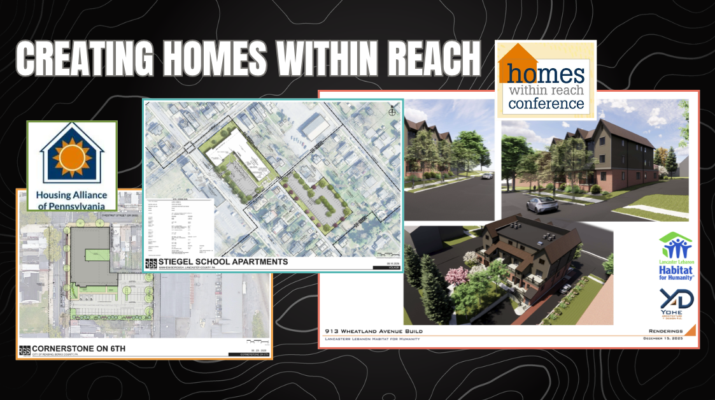
As RGS prepares to participate in the Housing Alliance of Pennsylvania’s Homes Within Reach Conference this December, we’re highlighting three projects that show how thoughtful site design and collaboration can help create new housing opportunities.
Stiegel School Apartments: A New Chapter for a Manheim Landmark
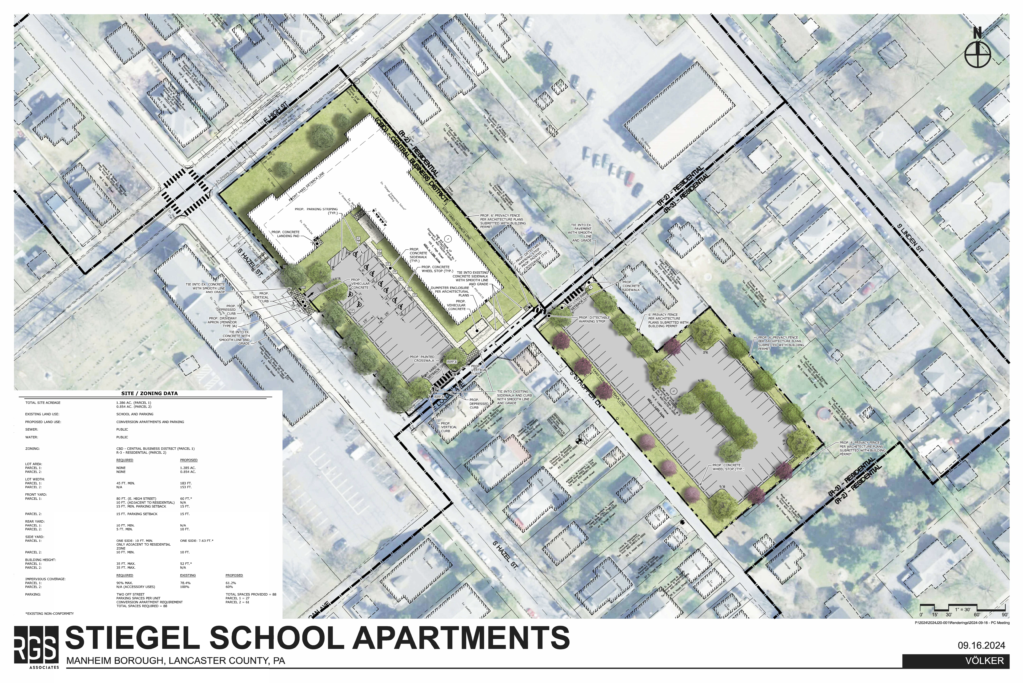
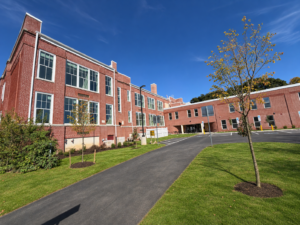
For generations, the former Stiegel Elementary School was a familiar part of downtown Manheim. Now, the 52,000-square-foot building is being transformed into a residential community for older adults.
Led by Völker Development, the Stiegel School Apartments project will create 44 affordable senior apartments, including one- and two-bedroom residences, while preserving the building’s historic exterior appearance.

RGS Associates Principal Alex Piehl, RLA, and his team provided site planning, zoning hearing support, and stormwater management design to help accommodate the building’s new residential use.
The project illustrates a unique opportunity in affordable housing development: adapting an existing community landmark to meet changing needs. By retaining the school’s recognizable character while introducing a new purpose, the development will help address a need for affordable senior housing in the Manheim area.
Cornerstone on 6th and Chestnut: Revitalizing a Piece of Reading’s History
In downtown Reading, six historic commercial buildings that once housed a brass works company, a hosiery mill, and Berks Engineering Company are being prepared for a significant transformation.
The Cornerstone on 6th and Chestnut project, developed by HDC MidAtlantic in affiliation with Landis Quality Living, will convert the buildings into 51 affordable senior apartments, including a community room.
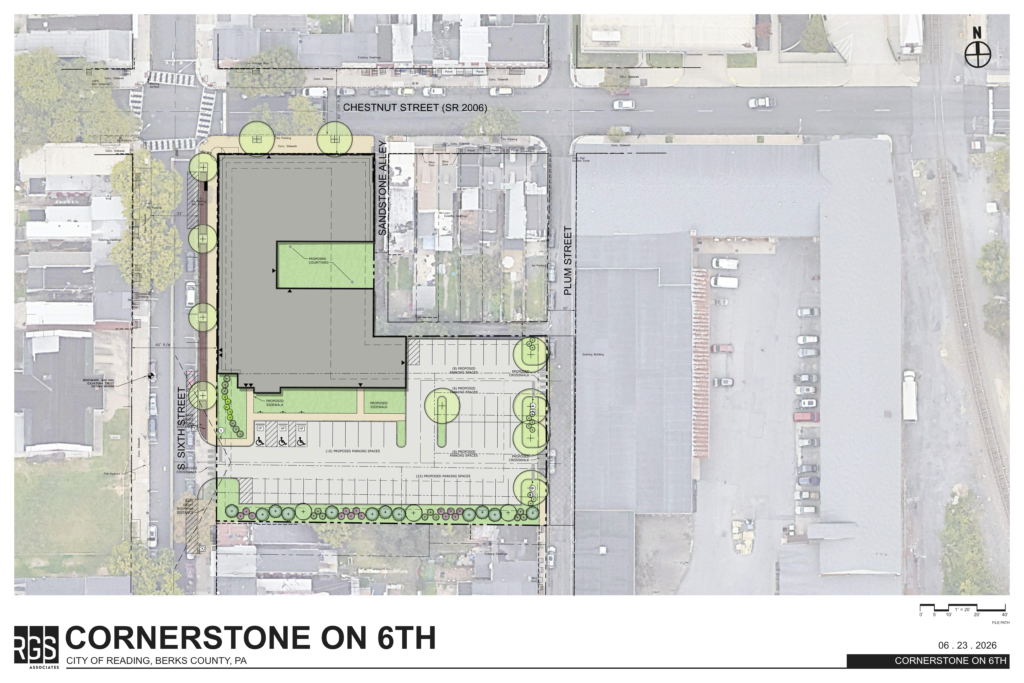
Located near the Reading Train Station and other downtown cultural and community services, the development will bring new residential opportunities to a collection of severely deteriorated properties.

The project encompasses 10 parcels, adding complexity to the planning and approval process. Led by RGS principal Bill Fredericks, PE, the RGS team provided site planning, zoning hearing support for multiple use approvals and dimensional variances, utility coordination, and stormwater management design.
Currently in design development and working toward final plan approvals, Cornerstone is planned for occupancy in 2028.
The project represents an opportunity to return long-underused buildings to productive use while creating affordable homes for older adults in an established urban neighborhood.
Bridgeport Housing: Finding a Better Fit for an East Lampeter Neighborhood
Along Lincoln Highway East in East Lampeter Township, a former used car dealership is being reimagined as 13 affordable rental apartments. The property includes an existing house and garage, the latter previously converted into an apartment.
Developed by Chestnut Housing, the Bridgeport Housing project took shape as the township revised its zoning ordinances to encourage housing development. Members of Forest Hills Mennonite Church helped make the property’s purchase possible in anticipation of changes that would allow greater residential density.
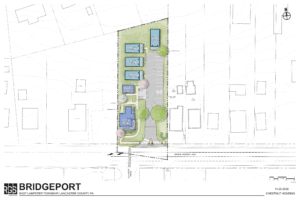
An early concept called for a conventional three- or four-story apartment building, likely requiring demolition of the existing structures. Working with Tippets/Weaver Architects, RGS explored alternatives that could make better use of the site.

The selected design instead retains and restores the house and garage, with stacked flats extending farther into the property. It accommodates similar residential density at a scale more in keeping with the surrounding neighborhood, while allowing for a less costly construction approach.
Led by RGS Associates’ Ben Morton, RLA, the team provided site planning, zoning hearing support for multiple variances, stormwater management design, and PennDOT highway occupancy permit services for a new driveway and utilities.
Supported entirely by private funding, primarily from local churches and community organizations, Bridgeport demonstrates how design decisions and community partnerships can work together to make affordable housing feasible. Construction is targeted to begin in early summer 2027.
Building on What Communities Already Have
Although these three developments differ in size, setting, and approach, each begins with a clear community need and a site whose existing conditions shape the possibilities for new housing.
Together, the three developments are planned to provide 108 affordable rental apartments across Manheim, Reading, and East Lampeter Township.
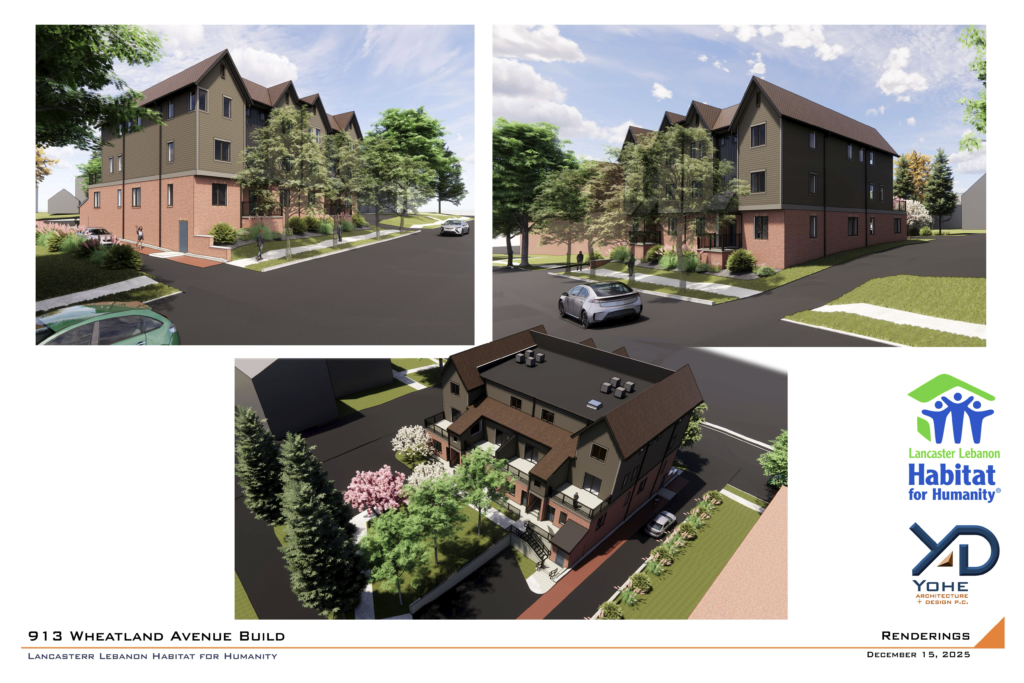
RGS’s work also extends to affordable homeownership. At 913 Wheatland Avenue in Lancaster, Lancaster Lebanon Habitat for Humanity plans eight for-sale condominium units on a former hospital parking lot. The site presents significant grading, alley-access, and utility-infrastructure constraints, making careful planning and coordination with neighbors essential.
For the organizations developing these properties, success depends on balancing housing needs with financial, regulatory, and physical realities. Site planning, zoning approvals, stormwater management, and coordination with local authorities all play important roles in making these projects feasible.
RGS Associates is proud to support clients and community partners expanding access to affordable housing throughout Pennsylvania. Participation in the upcoming Homes Within Reach Conference offers an opportunity to connect with others working toward that same goal.