Designing for Change: How Senior Living Communities Are Rethinking Life on Campus
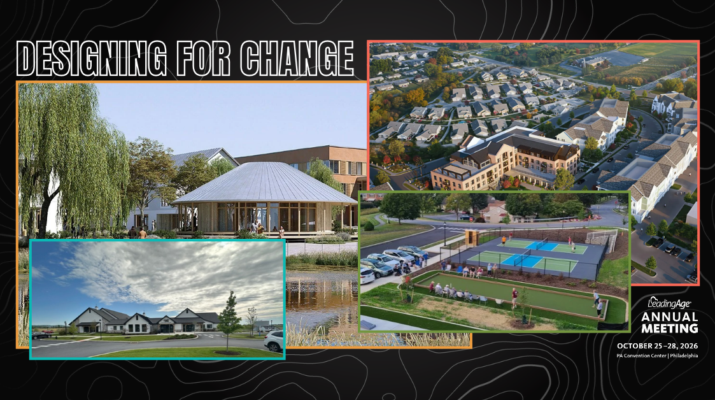
RGS Associates will be at LeadingAge 2026!
Planning on attending the Annual Meeting? Connect with us in Philadelphia from October 25-28 at the Pennsylvania Convention Center, Booth #1540.
The future of senior living is being shaped by organizations willing to look beyond a single building type, amenity, or model of care.
They’re focusing their attention on bigger questions:
- How can outdoor spaces encourage greater independence and freedom?
- How can an existing campus adapt as resident expectations change?
- And how can thoughtful design create opportunities for connection rather than simply places to live?
Across the senior living industry, those questions are changing how communities think about their campuses. For RGS Associates, they’re also changing the conversations that happen at the beginning of a project.
Some communities are planning substantial expansions organized around arts, outdoor living, and shared experiences. Others are creating memory care environments that offer greater freedom of movement. Still others are reimagining existing spaces to better serve residents’ changing needs.
The projects may look different, but they share an important idea: Meaningful change begins by designing for the people who will experience it.
Designing for Purpose at Garden Spot Village
Garden Spot Village has spent years considering what the next generation of its New Holland campus should become.
The design of Sycamore Springs South, a planned expansion of the community, completely reconsiders the relationship between housing, outdoor space, cultural opportunities, and everyday life.
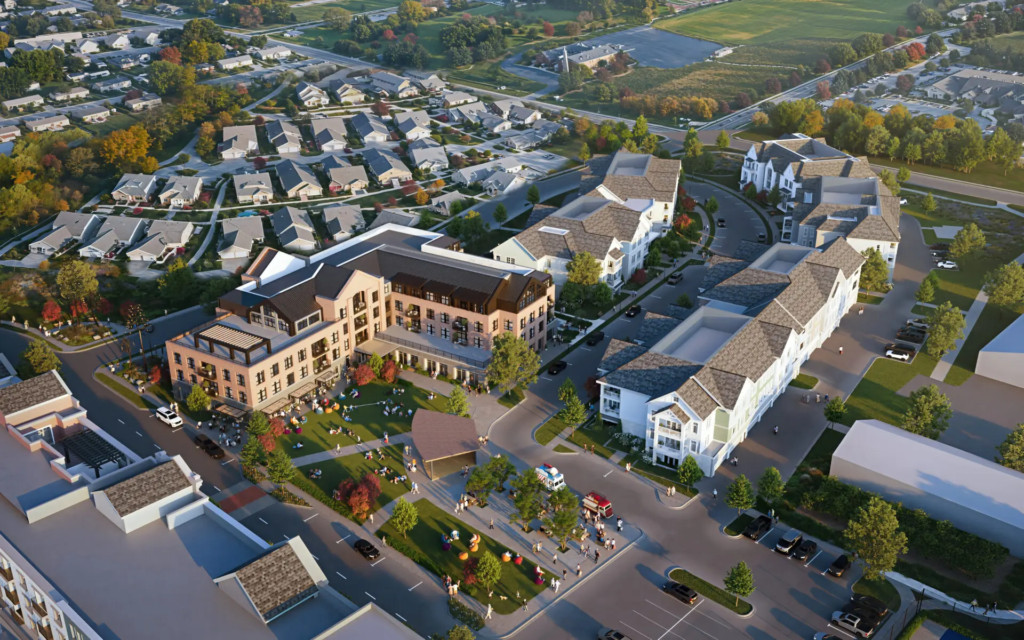
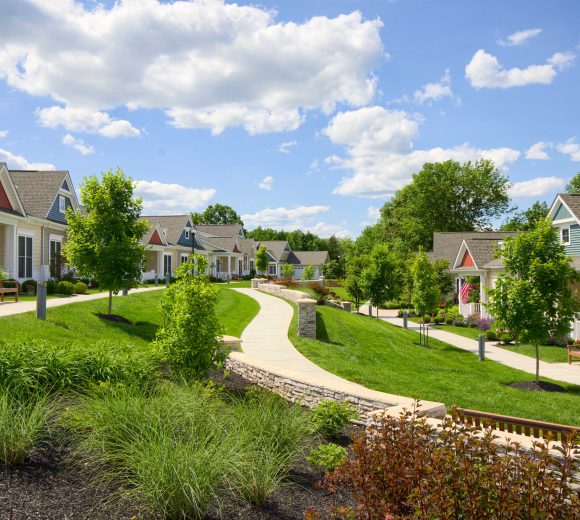
Drawing inspiration from traditional neighborhoods, and uniquely designed communities around the world, the expansion incorporates shared outdoor spaces, rooftop terraces, a central green, and smaller gathering places that encourage residents to engage with the people and activity around them.

“It’s really about how you engage people in the aging process,” said Mark Hackenburg, RLA, Principal at RGS Associates. “How do you create a life of abundance?”
That question helped guide an unusually deliberate design process.
RGS and Garden Spot studied communities outside Pennsylvania, including visits to properties in Georgia and Washington, to understand why certain environments felt particularly active and connected. The team examined details ranging from building placement to the informal gathering spaces created between structures.
“There was a level of intentionality to the design and the design process for this project that many communities just would not have spent the time and energy to deliver,” Mark said.

“Steve [Lindsey, CEO at Garden Spot Communities] has an innate passion and desire to create a community that is uniquely different. He has challenged all the designers involved to view this project through a different lens.”
One of the expansion’s defining elements will be the Center for Arts and Culture, envisioned as a true performance venue rather than a multipurpose room. It will provide opportunities for music, theater, and creative expression, including participation by organizations from outside Garden Spot Village.
The goal is to create opportunities for residents to continue pursuing lifelong interests while bringing fresh cultural experiences, new vitality and enhanced intergenerational connections into the community.
Kreider Farms Cultural Center: Connecting Campus and Community
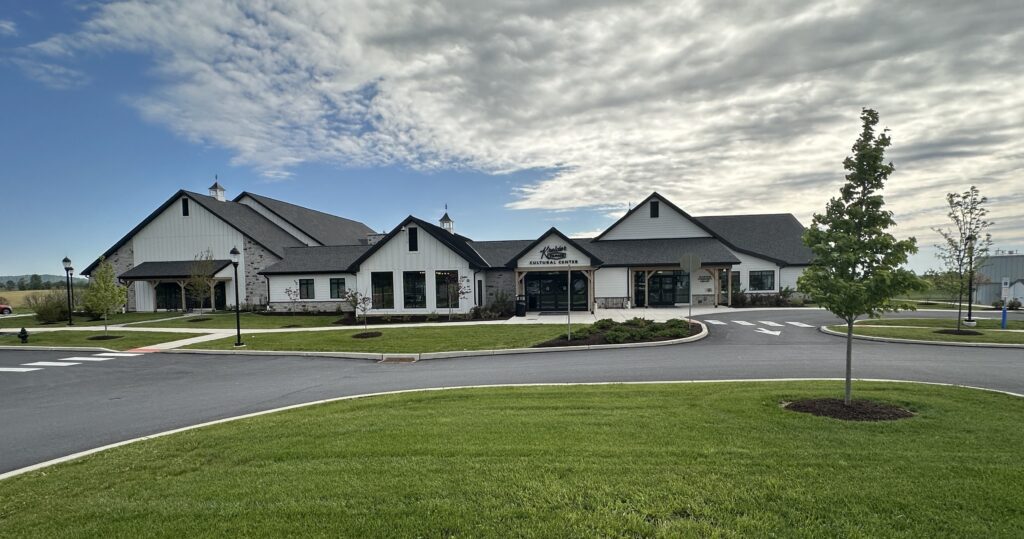
At Pleasant View Communities in Manheim, the Kreider Farms Cultural Center at Hoffer Farm is helping bring the surrounding community onto campus.

Anchored by a public library and event venue, the project includes an extensive network of sidewalks, trails, and pedestrian crossings connecting the Cultural Center with Pleasant View’s entire campus and adjoining residential neighborhoods.
RGS designed these pedestrian connections around challenging grades, existing retaining walls, and with safety and accessibility in mind for Pleasant View residents and campus visitors.
“I think the incorporation of the library into the campus is very unique,” said RGS Principal Alex Piehl. “To bring that public space onto the campus, to host a space for that.”
Creating More Freedom at Willow Valley Communities
What if memory care could feel less like living in a care facility and more like living in a familiar neighborhood, where residents maintain the freedom to explore, socialize, and participate in everyday life?
That question is central to the Marlin and Doris Thomas Memory Center at Willow Valley Communities.
Inspired in part by De Hogeweyk, a pioneering dementia village in the Netherlands, Willow Valley has embraced a model that integrates care into the rhythms of daily life rather than organizing daily life around institutional care.
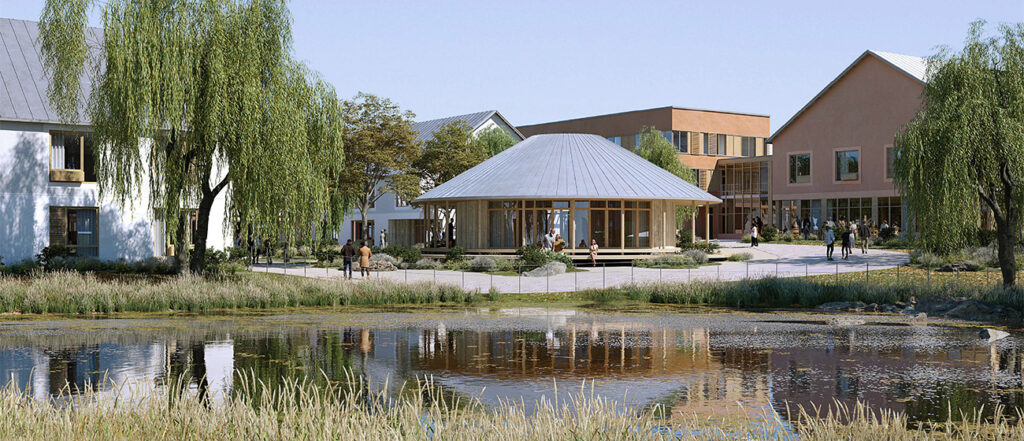
The seven-acre campus features residential neighborhoods connected to a central gathering space, gardens, walking paths, and familiar destinations, including shops, dining, and recreational spaces.
Rather than confining residents to a building or enclosed courtyard, the design encourages them to move more freely throughout a secure environment, pursue familiar routines, and make choices about how they spend their time. “It’s about giving residents living with dementia a level of independence and freedom to explore when compared to more traditional models of memory care,” Mark said.
Achieving that vision required an approach to site design that balanced independence with the safety and security needs of residents experiencing cognitive decline. RGS supported the project through site planning coordination, exterior design collaboration, and the regulatory approvals necessary to help bring the overall vision to life.
“It’s unusual in the U.S.,” Mark said. “You either don’t have the operational capacity, or you lack the vision to implement something this unique.”
Willow Valley had both, creating an environment where the needs of residents inform the design of the entire community, rather than limiting the possibilities of daily life.
When Change Happens Within the Space You Already Have
Not every senior living community has acres of undeveloped land available for a new neighborhood or care campus.
Sometimes progress means reconsidering what is already there.
At Barclay Friends, RGS is developing new concepts and fresh ideas for the renovation of two existing personal care and memory care gardens.
The gardens occupy relatively small areas within an established community, leaving limited opportunities for expansion. Their existing conditions also present concerns related to safety, accessibility, and changing resident needs.
“What may have worked yesterday is being thought about differently today,” Mark said. RGS developed several design concepts intended to help the community reconsider how these spaces could better serve residents. Because many residents have connections to coastal communities, some concepts incorporate familiar elements, including a small boardwalk and visual references to beaches and shore environments.
These features reflect an effort to make relatively small spaces personally meaningful to the people who use them. The project remains in the schematic design and cost-estimating stages, but it demonstrates that innovation doesn’t necessarily require starting over.
An aging garden or underused courtyard can become an opportunity to rethink how the physical environment supports safety, engagement, memory care, and an improved quality of life.
Designing Around the People Who Live There
There is no single design formula for the next generation of senior living.
- Garden Spot Village is creating a neighborhood around purposeful living and cultural engagement.
- Pleasant View is strengthening connections between their campus and the surrounding community.
- Willow Valley has reimagined freedom and movement within memory care.
- Barclay Friends is examining how existing outdoor spaces can evolve alongside the people they serve.
The common denominator is intentionality. Rather than simply asking what they need to build, these organizations are considering what residents will experience once it is built.
For RGS, that means understanding each organization’s vision, the people who will use the spaces, and the physical and regulatory realities of each individual project. It also means helping clients challenge assumptions about what a senior living environment can become and the intentionality around who it serves.
These are some examples of organizations changing the industry. RGS helps their ideas become real.
RGS Associates will be at LeadingAge 2026!
Planning on attending the Annual Meeting? Connect with us in Philadelphia from October 25-28 at the Pennsylvania Convention Center, Booth #1540.