For the Kendal at Longwood Health Center, Site Design Supports a More Connected Experience of Care
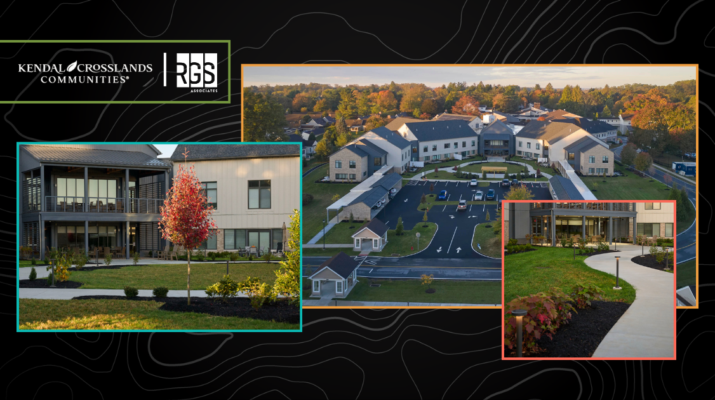
At the Kendal at Longwood Health Center, residents experience care not only in clinical spaces, but also in the paths, courtyards, windows, and porches they use every day.
That’s why, when the time came to expand the Kennett Square, PA Health Center, collaboration was so important. Kendal-Crosslands Communities brought the vision for a more connected Health Center, and RGS helped translate that vision into the surrounding site, working closely with Lenhardt Rodgers Architecture + Interiors, the Fort Washington firm that led the architectural and interior design.

That collaboration depended on each firm understanding where its work met the other’s. For Jamie Ober, senior designer and principal at Lenhardt Rodgers, RGS brought a valuable combination of technical and creative perspective to the project.
“What I really enjoy about RGS is that they bring landscape design and civil engineering together,” she said. “That’s unique.”
For Seth Beaver, Vice President of Operations at Kendal-Crosslands Communities, that combination, along with their extensive knowledge of the campus, was a huge benefit to choosing RGS as a partner.
“We want them to be familiar with our campus, our stormwater systems, the local conservation district, and the township,” Seth said. “RGS understands our campuses, they understand the way we operate, and they understand the collaboration we have with the residents.”
Designing Around Quality of Life
The Kendal at Longwood Health Center renovation project included additions to the existing healthcare facility and involved two primary components: the health center and independent living.
From the perspective of Kendal at Longwood, the project went way beyond a building expansion. “This project is really transforming the delivery of healthcare on our campus,” Seth said. “It’s a major change for us.”

As the project developed, the team moved toward a layout that brought the Health Center together on one level. The decision had major implications for the building footprint and surrounding site, but it also supported a clearer, more accessible experience for residents and staff.
“This was very much about connection,” Jamie said. “Especially the physical and the social connections between people and place.”
Natural light, large windows, gardens, courtyards, walking paths, porches, and patios were part of how the Health Center would function day to day. Working with RGS, the architectural team looked closely at how residents would move through the building and what they would see as they did.
“We used building views of the exterior as a way of wayfinding,” Jamie said. “What do you see through those openings? Is there a tree there? Is it open? These were really practical design conversations relative to the wayfinding aspect of the building.”
In a personal care environment, views to the outdoors can help orient residents, provide visual cues, and create moments of calm and familiarity throughout the day.
Making the Outdoors Part of Daily Care
For RGS, the project required careful coordination of landscape architecture and civil engineering within an active senior living campus. The team had to support the Kendal-Crosslands Communities design goals while addressing grading, stormwater, emergency access, and the needs of existing residents nearby.
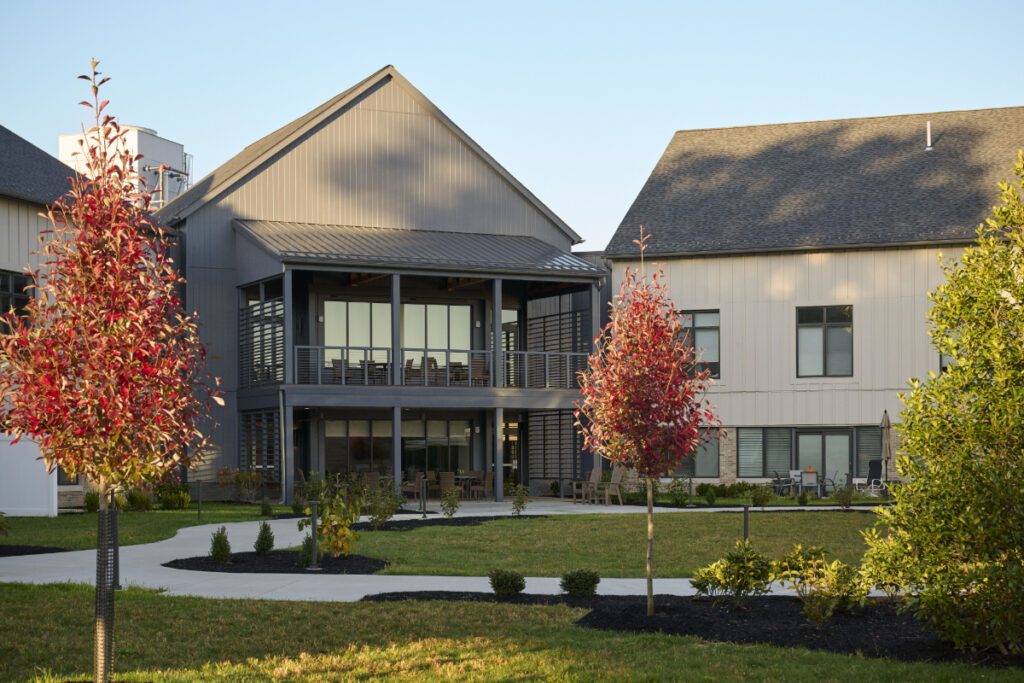
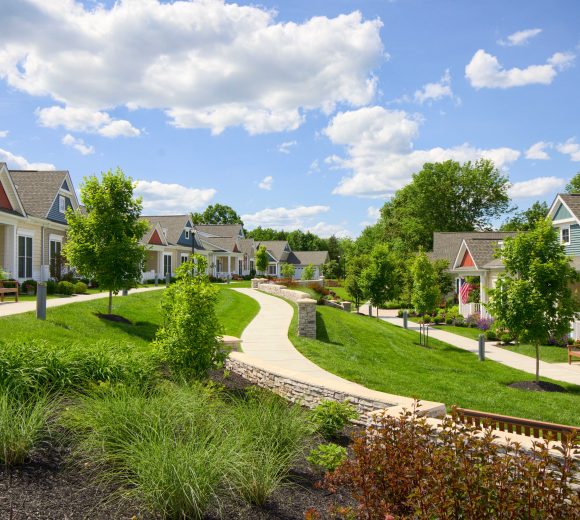
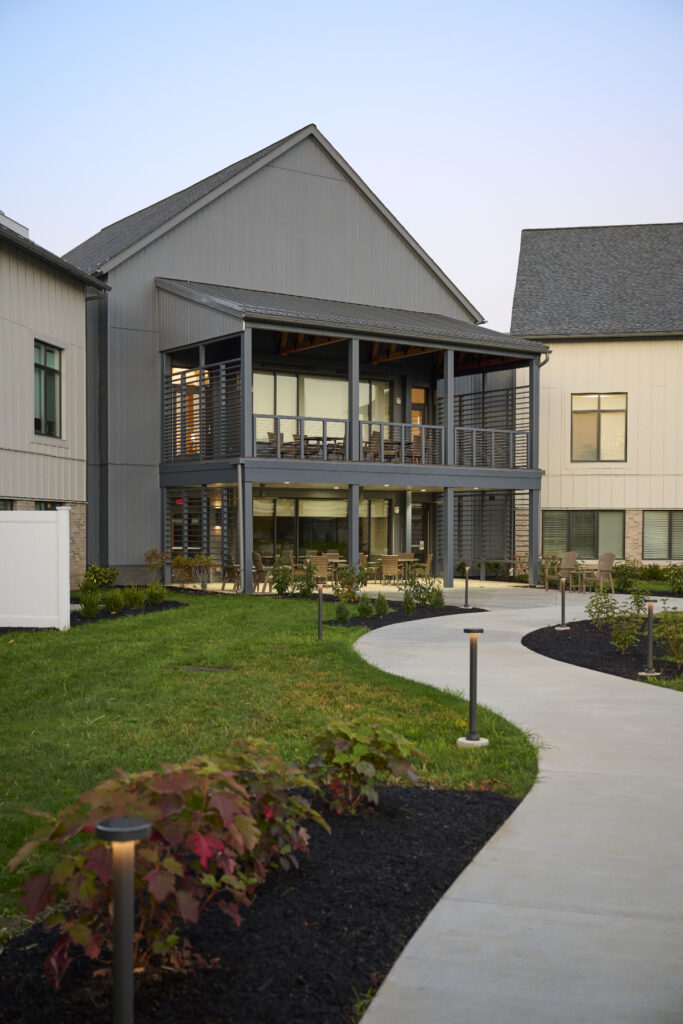
As RGS developed the gardens, walking paths, and outdoor amenities, the team worked with Lenhardt Rodgers to connect the building and the landscape. That connection can be seen in the porches and patios, where the architecture extends into the courtyards and walking paths.
“We talked about what that experience was going to be based on the landscape,” said Joyce Gerhart, RLA and senior associate at RGS. “Not just the view, but if there’s a canopy tree there that’s going to go up to the second floor, what’s that going to feel like on that porch or on that patio?”

Near a gathering room, the goal was to preserve longer views and keep the landscape more open. In a courtyard, the team focused on creating a butterfly and bird garden, paired with a covered porch that could support a three-season outdoor experience.
In other places, RGS achieved openness by screening off less desirable views. For example, community space that looked toward a parking area created a practical design obstacle. Residents and visitors needed nearby parking, but the courtyard still needed to feel calm and connected to nature.
“The challenge was being able to let people see, but block what we didn’t want them to see,” Joyce said. The solution was to use planting and screening in a way that preserved useful views while softening the presence of the parking area.
Solving Constraints Without Losing the Vision
As the project evolved, some of the most important decisions happened where technical constraints met resident-centered goals.
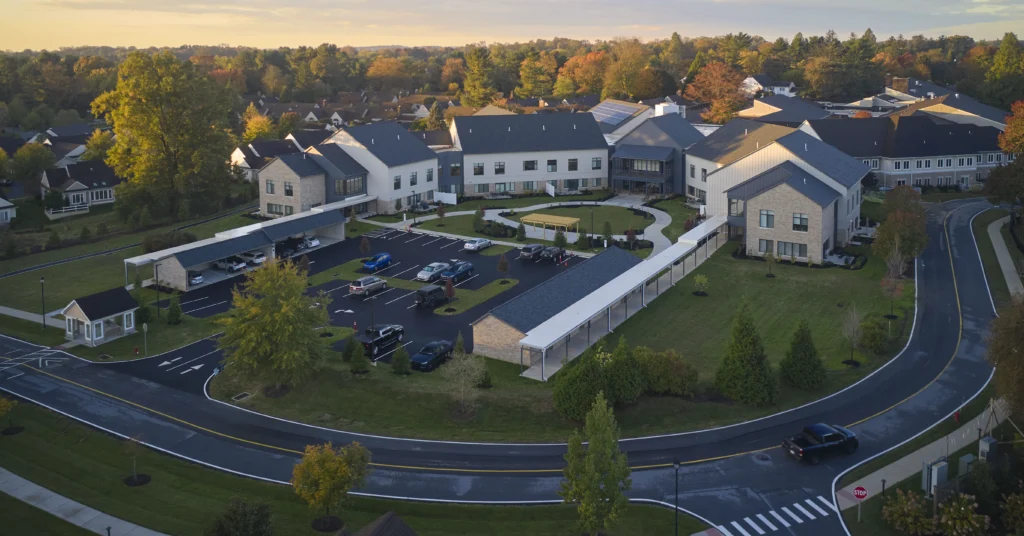
When the healthcare program shifted to one floor, for example, the new building footprint created a direct conflict with an existing stormwater facility located under the existing parking lot.
 Kendal-Crosslands Communities initially didn’t want to disturb that facility. It would mean new requirements and a different stormwater solution. Before long, however, it became clear that if they wanted a one-floor Health Center, keeping the stormwater facility wasn’t going to work.
“As things progressed, we had the conversation with Kendal at Longwood, saying, ‘If you want to meet your goals, the existing stormwater facility needs to be removed,’” Joyce said. “So, we came up with other solutions for stormwater management, rather than just saying, ‘You have to figure out where else to put the building.’”
The site also had to absorb a full story of grade change between parts of the campus. At the front of the building, visitors enter at one level. From the parking lot and courtyard area, they enter at a lower level. A campus walkway also had to handle the grade change as it moved toward the building.
A straighter walk may have looked simpler on paper, but it would have been too steep. Instead, RGS designed a meandering walkway, allowing the grade to rise more gradually while avoiding the need for a ramp with handrails. The team also incorporated places where residents and visitors could stop and rest along the way.
The goal, Joyce said, was to “integrate all that and make it look purposeful.”
Keeping the Design Quiet
When Jamie looks back at the project, what stands out most is the building’s minimalist character and its integration with the landscape.
“I think it really celebrates the Quaker values of simplicity,” she said. “It wasn’t over-designed. It took a lot of restraint and editing to create a simple design, and I’m pretty proud of that.”
Local ordinance requirements called for a significant amount of landscaping, so RGS had to meet those requirements without making the site feel overly busy. The team used larger groupings of shrubs of the same type, along with selected accents, to create a landscape that felt intentional and appropriate to Kendal at Longwood’s campus character.
“It became a challenge for us to try to edit it as much as we could,” Joyce said, “but still meet those ordinance requirements.”
A Place Residents Can Call Home

For Kevin Ebling, a project manager at Lenhardt Rodgers who has continued to work on the project through construction administration, the most meaningful feedback has come from residents themselves. He said residents have stopped him in the hallway to say the new space feels like a place they can call home.
“To me, that just resonates,” Kevin said. “That made my day. I’ve had numerous similar conversations with residents, and I think that’s really the great part of it.”
The Kendal Health Center required healthcare planning, senior living design, interior design, landscape architecture, civil engineering, and careful coordination on an active campus. But the real test is simpler than that: residents are using the spaces and enjoying them.
For a project built around quality of life, that may be the clearest measure of success.