Upgrading the Past: The Reserve at Maybrook
*This article highlights our work on The Reserve at Maybrook and was originally published by Landscape Architect & Specifier News (LASN) Magazine.
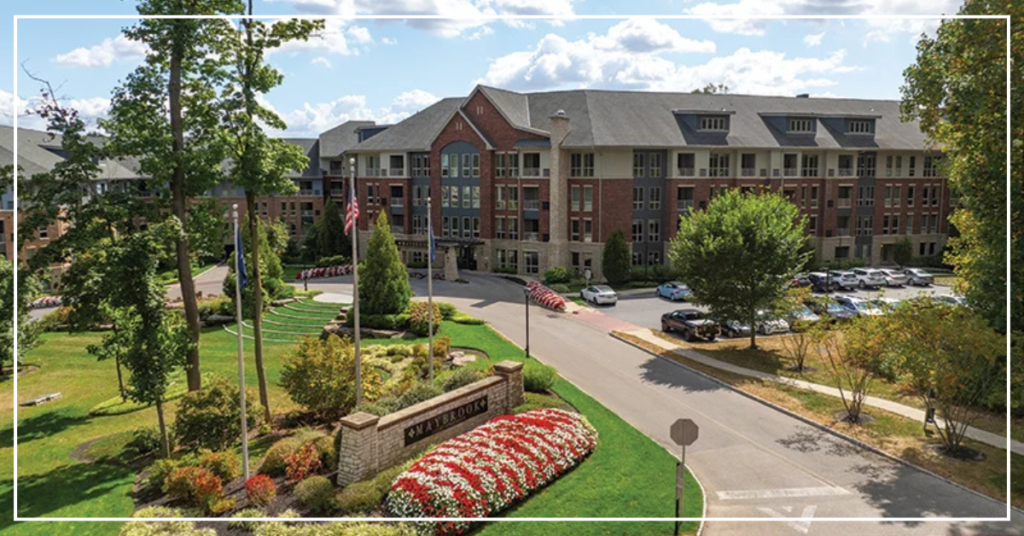
Located just west of Philadelphia, Pennsylvania, the historic Maybrook estate represented untapped possibility in the mixed-use realm.
After 18 months of planning led by officials in the development’s jurisdictions of Lower Merion Township and Narberth Borough, The Reserve at Maybrook emerged in 2017 as a historically situated, high-end apartment complex that integrates walkability enhancements for the larger neighborhood. Landscape architectural services, including land planning, impact studies, and construction observation, were the domain of RGS Associates located in nearby Lancaster, Pennsylvania.
Zoning Innovation & Planning Process
The 42-acre estate adjacent to the Wynnewood Train Station has considerable frontage on both Penn Road in Lower Merion Township and North Wynnewood Road in Narberth Borough.
When the property owner brought forward a large-scale redevelopment plan for the site in the early 2000s, township planners recognized the significant impacts of such a development and initiated a thoughtful facilitation process that took place over an 18-month span. During this period, the property owner worked with Lower Merion Township, Narberth Borough, the Lower Merion Conservancy, the Southeastern Pennsylvania Transport Authority (SEPTA), and adjacent civic associations to refine the development concept and identify the needed improvements.
The facilitation process revealed that Lower Merion Township’s zoning ordinances allowed for the infill development of a new, 250-unit luxury apartment community that maintained the historic presence and value of the site while permitting it to be used for multiple purposes.
As the site was within the sphere of the township’s Open Space Preservation District, which applies to residentially zoned properties with five or more acres of land, a minimum of 50% of the tract was required to be set aside as permanently protected open space. This stipulation created a guideline for the design team to use and ensure that the new development was efficiently laid out
Wooded lot calculations and tree replacement ordinances were also part of the municipal’s requirements for the project, resulting in the obligation that over 280 additional trees be planted on the estate’s grounds.
Historic Considerations
At the center of The Reserve at Maybrook sits the 20,000-square-foot Maybrook mansion, originally built in 1881 as a summer retreat for whiskey baron Henry C. Gibson. Over the years, the mansion and its environs have served as landmarks for both residents of and visitors to the area.
Architecturally inspired by Scottish castles, the mansion was listed as a Class 1 resource in the township’s Historic Resource Inventory as a condition of the township’s initial approval for the development of the land. This listing allows the notable building to have multiple uses, with rooms serving as offices, a community center, an event venue, and an area for a small number of residential units.
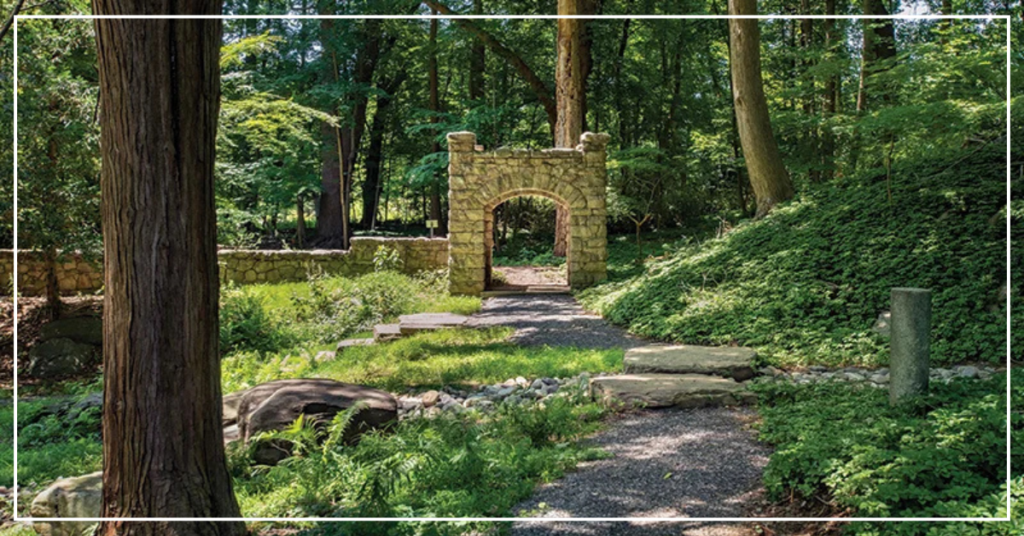
As part of the original subdivision, the time-worn carriage house, gate house, and barn were also preserved, retaining the fundamental feel of the northern portion of the site.
Site-Sensitive Design
The community planning process for this large property helped identify the key context-sensitive goals for the development: preserve and integrate the historic resources within the estate and ensure any new structures were concentrated along the railroad line to minimize impacts on adjacent neighborhoods.
By locating the new development and a central parking structure close to the train station, more than 20 acres of open space were retained and integrated into the overall design, including acres of woodland and a buffer of mature trees along the railroad tracks. Where selective tree removal was necessary, hundreds of replacements, including native understory trees, were planted.
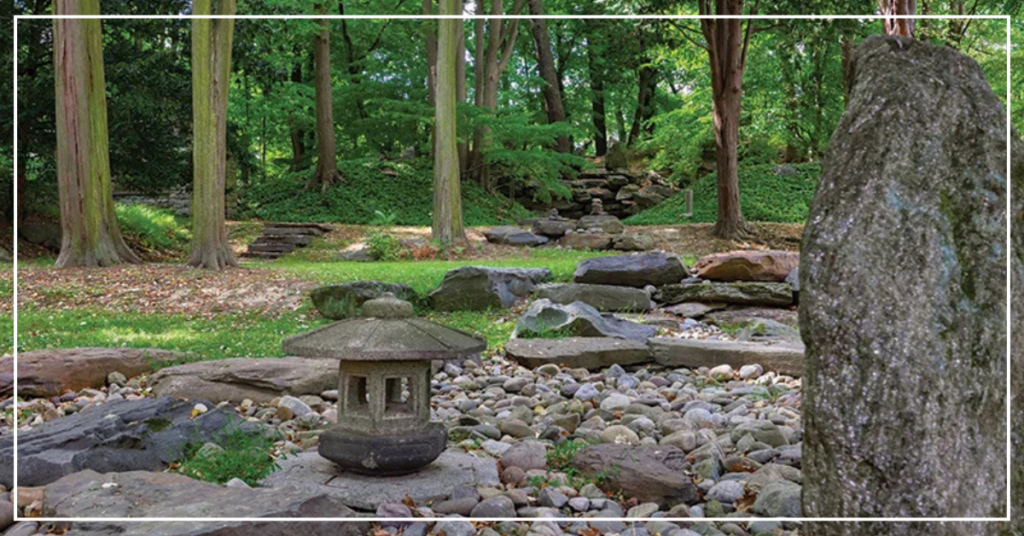
These actions created new outdoor spaces and tree edges. The resulting site design allowed for the restored mansion to remain nestled within its longstanding landscape, maintaining its authentic relationship to the refurbished Japanese gardens and the original carriage path to the train station.
Past and Present Comforts
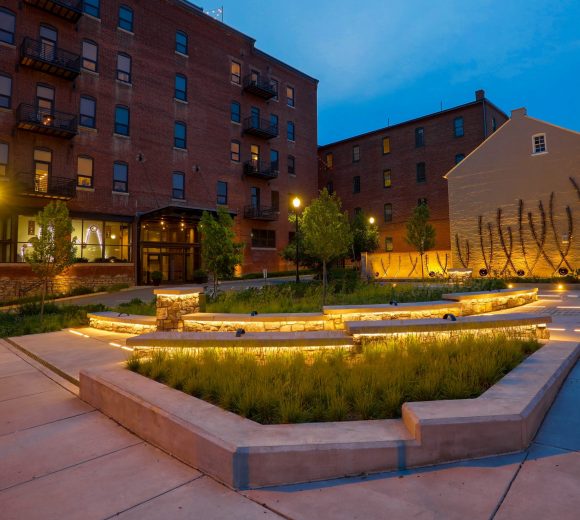
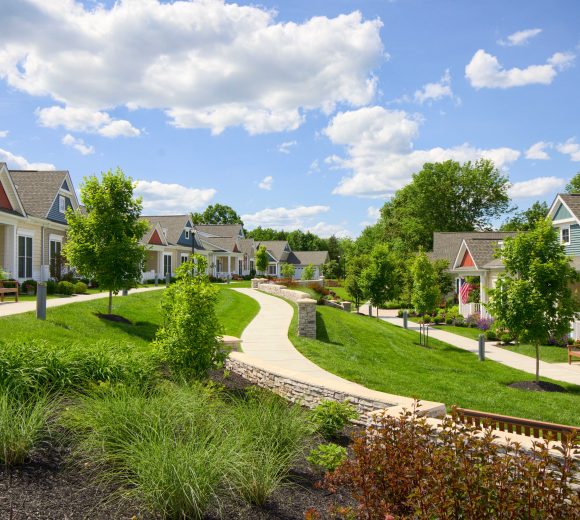
The Reserve at Maybrook integrates unique community amenities befitting its historical context, including an amphitheater, community gardens, and pathways.
In total, three-quarters of a mile of trails within the site and over a quarter mile of sidewalk along Penn Road were created as part of the development, opening the stately site for public enjoyment while improving resident access to facilities such as the Wynnewood Train Station and a nearby commercial area. This trail system provides access to two private courtyards with modern amenities for residents.
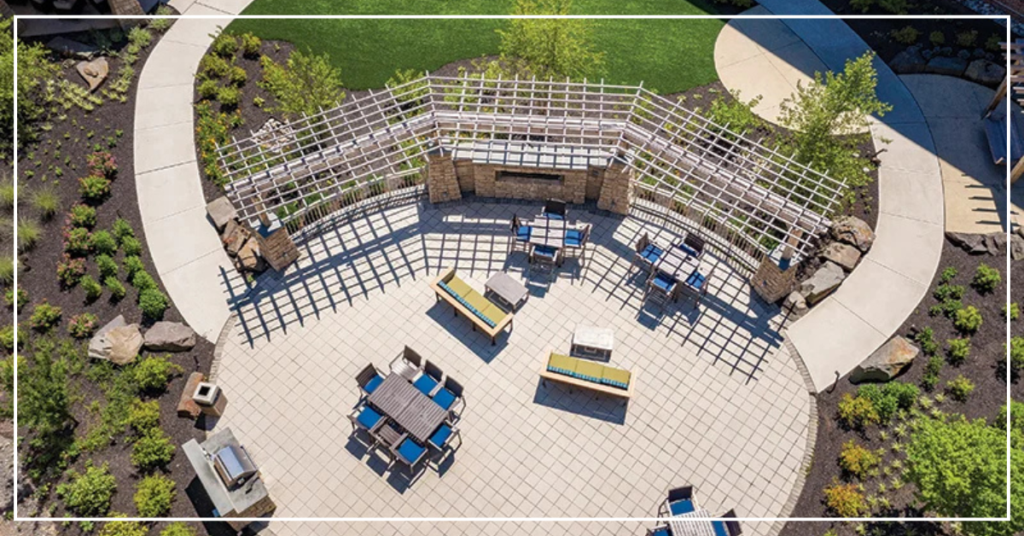
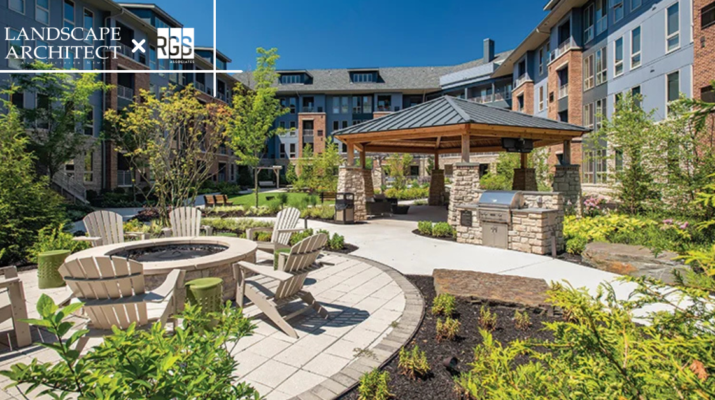
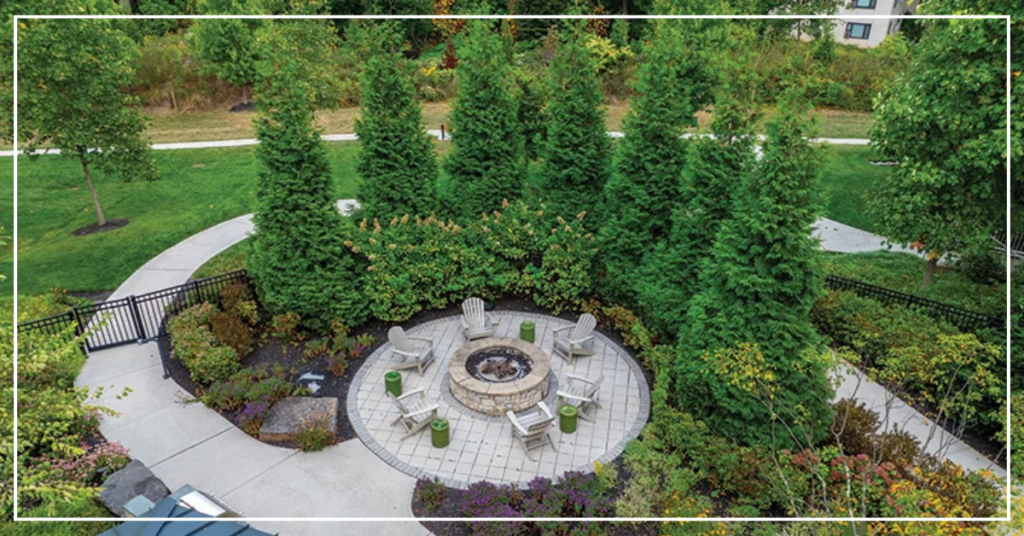
The eastern courtyard contains a wide variety of gathering and seating options, including a Western Red Cedar dining pergola, grilling areas, and fire pits surrounded by Adirondack chairs. An open lawn area is available for cornhole, and plantings like River Birch (Betula nigra) trees provide privacy for the activity areas and residents on the ground floor.
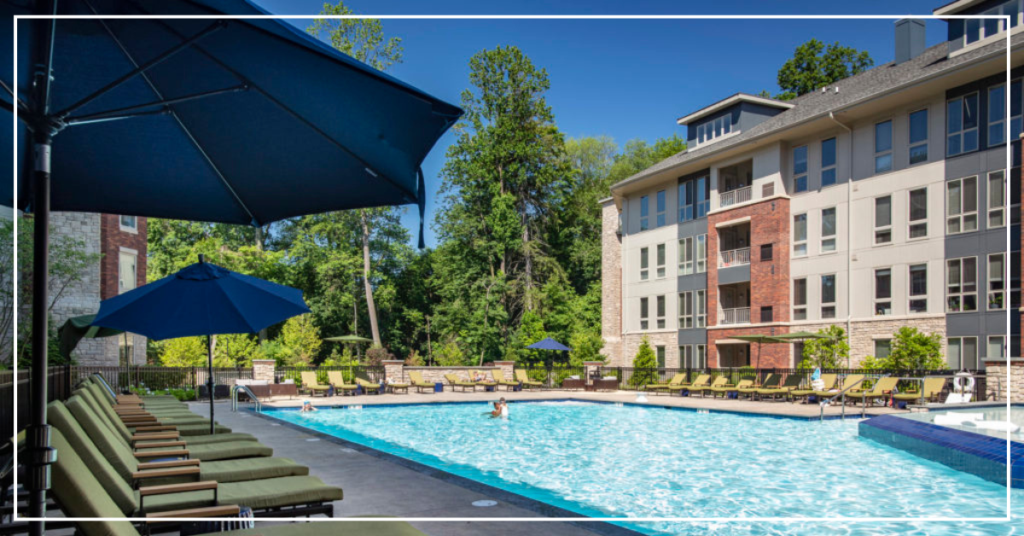
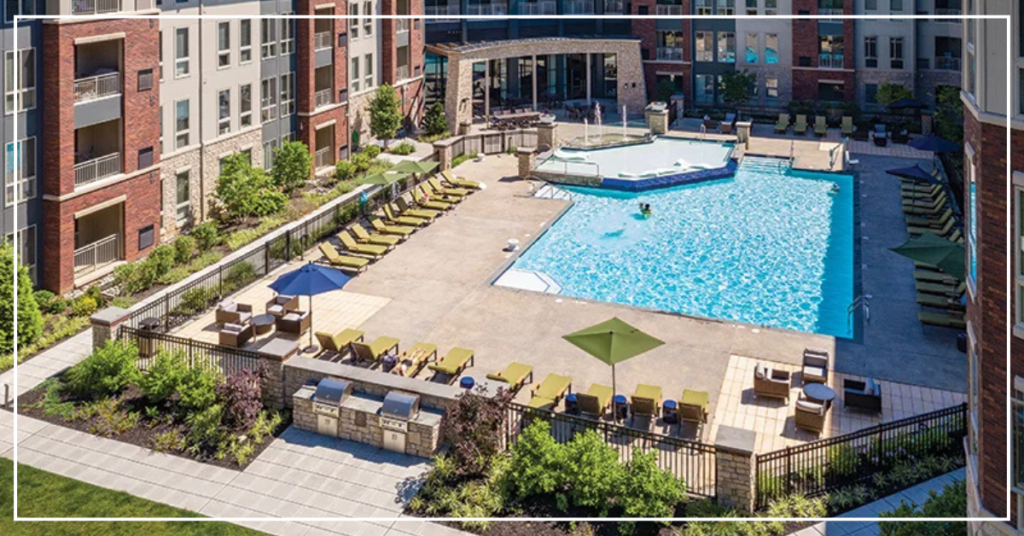
The western courtyard houses the property’s multi-level pool with fountains at the top, a smaller Baja shelf in the middle, and a large pool with lap lanes. Surrounded by poolside lounge seating and umbrellas, this courtyard also contains outdoor grills and dining tables.
Parking facilities are directly connected to the residences and are concealed from view by existing, mature vegetation. Other modern amenities on the estate grounds include paddle tennis courts, outdoor gathering and grilling areas, and a putting green.
Looking Forward
Reinforced by a lengthy community planning process, The Reserve at Maybrook is an excellent example of a historically sensitive infill project that resulted in the conservation of valuable bygone resources.
In 2023, at the 56th annual Montgomery Awards – which is sponsored by the Montgomery County Planning Commission and recognizes the best in land planning and environmental stewardship – this rigorous endeavor was honored for zoning innovation, historic preservation, and site-sensitive design.
The strategic reallocation of part of the estate as a transit-oriented apartment community, the thoughtful restoration of notable landmarks, and the protection of more than 20 acres of open space as a tranquil woodland prepares the Reserve at Maybrook for remarkable times yet to come.
TEAM LIST
- Landscape Architect / Land Planner: RGS Associates Inc.
- Client: Jefferson Apartment Group, Haverford Properties
- Original Owner / Developer: Robert Lockyer, Merloc Partners
- Developers: Haverford Properties, Jefferson Apartment Group / JAG Management Company
- Architect: KTGY
- Engineer: Momenee Associates, A Karins Company